← Compare the platforms
Raqib Digital Twin

AN AGENTIC PLATFORM FOR INDUSTRIAL SECURITY

Understand the plant.
Challenge the assumptions.

Model your industrial assets, networks and security boundaries. Explore potential attack paths, compare proposed changes and focus validation on the questions that matter to your operation.

Connected context · Directed intelligence · Accountability
Request a private demo
RAQIB / DIGITAL TWININDUSTRIAL REPRESENTATION
Operational contextPotential exposureFICTIONAL ENVIRONMENT · MODELED OUTCOMES

01 / REPRESENT

One facility.
A connected reality.

Connect production equipment, PLCs, operator systems and industrial networks in a common model. See the dependencies that individual asset lists miss, and give security and OT teams a shared understanding of what the operation relies on.

DEPENDENCIES IN VIEW

The cutaway connects physical equipment with its role in production, control and operational oversight.
Assets · Zones · Operational dependencies
See it in the platform

02 / EXPLORE

Trace the exposure.
Understand the consequence.

Follow a potential route through the model and examine the processes and devices it could affect. Agentic analysis helps focus the questions worth investigating, turning connectivity into a more purposeful discussion of industrial risk.

A QUESTION TO VALIDATE

Amber highlights a modeled route. A hypothesis and an observed test result carry different weight.

Potential paths · Critical assets · Investigation priorities
See it in the platform

03 / COMPARE

Challenge a scenario.
Compare a stronger position.

Place the baseline beside a proposed security boundary. See which relationships change, examine the trade-offs and build a focused case for validation. The executable-twin vision extends this into authorised attack-and-defence exercises inside an isolated replica.

COMPARE BEFORE CHANGE

Compare the modeled baseline and proposed boundary to frame a focused engineering review.

Baseline · Proposed change · Validation scope
See it in the platform

04 / APPLY

Turn technical context
into operational priorities.

Focus on production, control or operations to see how a concern fits the wider facility. Bring asset context, proposed improvements and supporting findings to the people who decide—linking resilience planning with the evidence conversation in Raqib Compliance.

PRIORITIES WITH CONTEXT

Select a floor to connect the industrial role with the questions and improvements your team should consider.

Operational impact · Recommendations · Evidence

Review controller relationships and communication boundaries in the modeled environment.

See it in the platform

FROM THE MODEL TO THE PLATFORM

A deeper perspective.
A more considered decision.

Explore selected details from Raqib Digital Twin: assets, exposure, boundaries, scenarios and agentic recommendations.

THE DIGITAL TWIN VISION

Understand what is connected. Examine what can hold.

An industrial model gives teams a shared picture. The executable-twin direction takes the next step: scoped validation in an isolated replica, with findings tied to what was actually tested.

  1. 01Facility context
  2. 02Digital model
  3. 03Isolated validation
  4. 04Evidence for review
Product direction: from industrial representation to controlled validation.
01

Model the questions that matter

Use the digital representation to explore dependencies, potential exposure and proposed changes.

02

Design for controlled validation

The executable-twin design brings attack and defence agents into authorised exercises, with findings qualified by the depth of the replica.

03

Extend toward recovery rehearsal

Planned capability: rehearse recovery in the twin and examine what it takes to restore operations. Availability and scope are discussed in a private demonstration.

Connect the findings to Compliance

Selected interface details with identifiers masked. All figures and assets are fictional, not customer results.

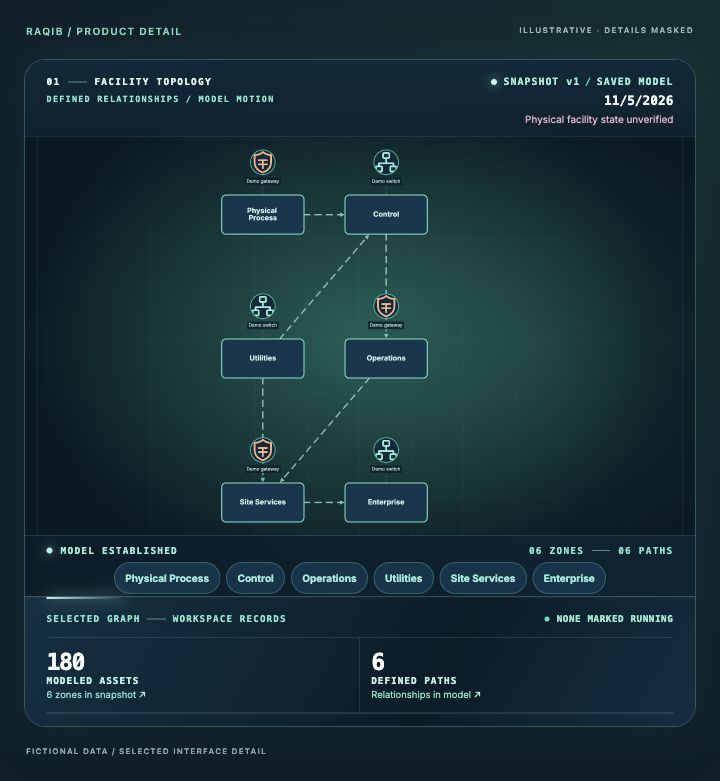
A wholly fictional six-zone facility model; no customer topology or live traffic.

01 / Connected representation

See the operation behind every connection.

Bring assets, industrial zones and communication relationships into one model. Give engineering and security a common reference for the environment they need to protect.

One facility context for engineering and security
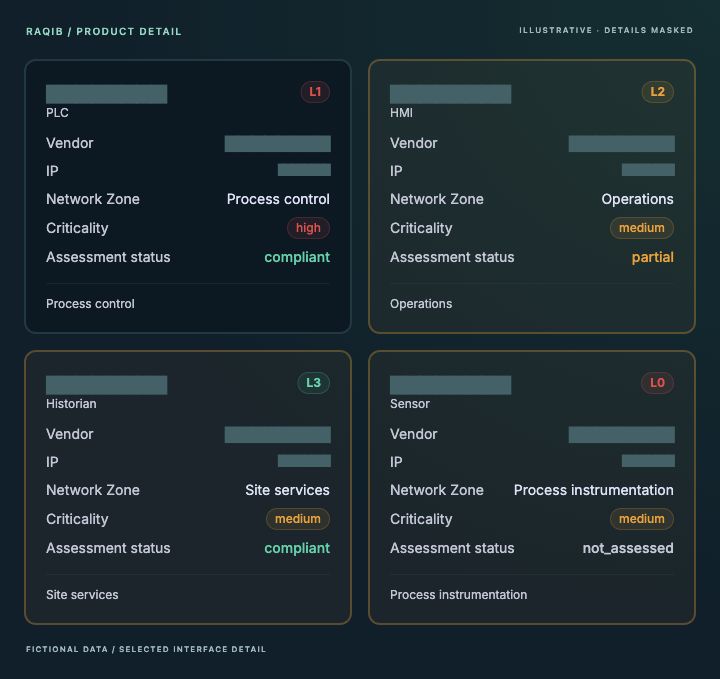
Selected PLC, HMI, historian and sensor cards with identifiers, vendors and addresses masked.

02 / Industrial visibility

Put critical devices in operational context.

Locate PLCs, operator stations, historians and sensors within their industrial zones. Understand the role of each device and the connections that make it relevant to operations.

Asset visibility with industrial meaning
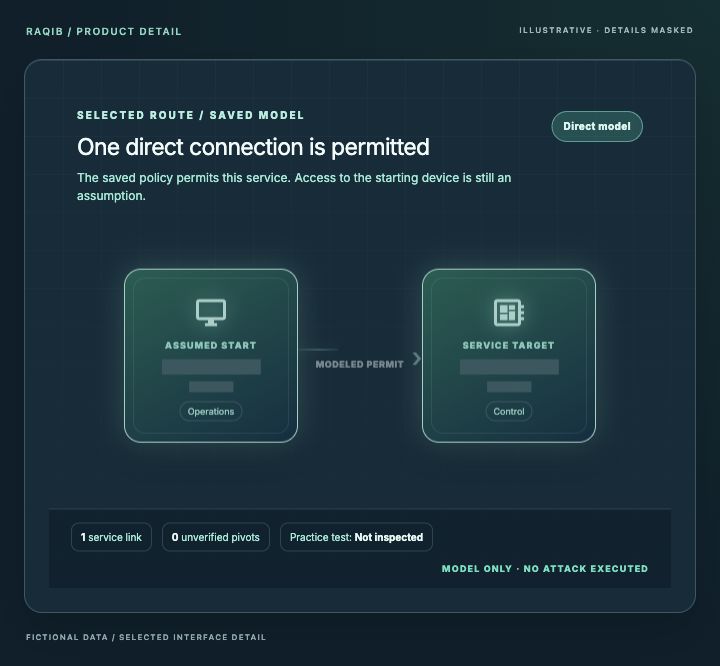
Illustrative modeled service route with device names and addresses masked; no attack executed.

03 / Modeled exposure

Investigate the paths that could matter most.

Explore potential routes through the model and the systems they could reach. Use those hypotheses to scope investigation; observed validation is needed to establish a tested finding.

From modeled possibility to a focused validation question
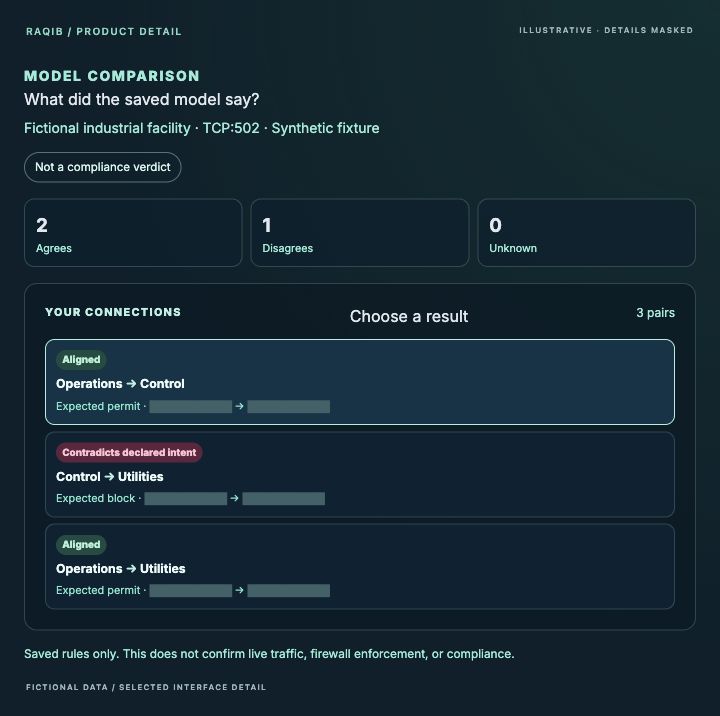
Fictional segmentation comparison with identifying details masked; model results only.

04 / Segmentation perspective

Understand what your boundaries protect.

Compare expected separation with modeled connectivity. Identify boundaries and dependencies that need engineering review before evaluating a change in a controlled environment.

Security boundaries, viewed through operational dependencies
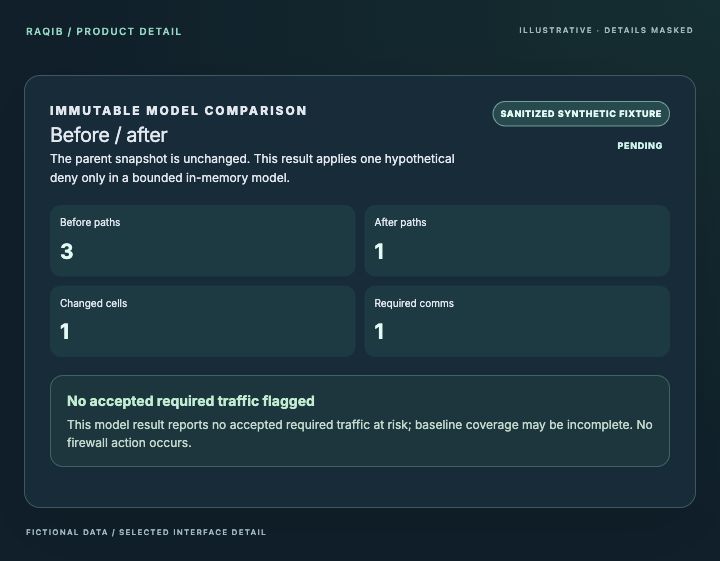
Selected before-and-after model comparison using fictional data; no firewall action occurs.

05 / What-if planning

Evaluate the change before it reaches the plant.

Compare a proposed security boundary with the baseline model. See which relationships change and discuss the implications before planning validation or considering a production change.

Compare alternatives. Understand the trade-offs.
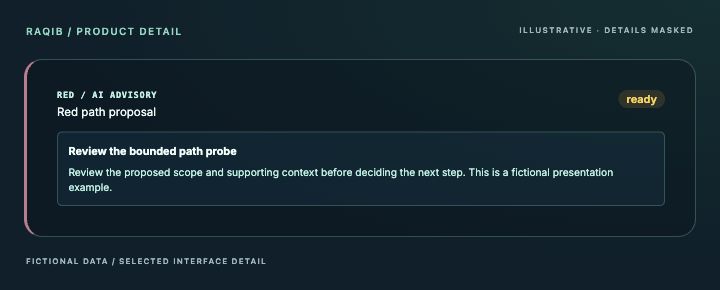
A fictional AI advisory proposal shown without planner inputs, operational instructions or internal logic.

06 / Agentic recommendations

Give expertise a stronger starting point.

Review proposed improvements alongside the modeled exposure that prompted them. Security and OT teams evaluate the options, set priorities and authorize the next step.

Recommendations with context. Decisions with accountability.

Represent the environment

Understand assets, boundaries and operational dependencies together.

Challenge the assumptions

Use modeled scenarios to frame focused questions for controlled validation.

Prioritize with evidence

Connect proposed improvements to the context and findings behind them.

A DIGITAL TWIN DEMONSTRATION

What changes when we change a boundary?

Use a fictional facility to compare a baseline with a proposed segmentation change. Examine the modeled implications and decide what would need validation.

Explore scenario planning
01

Start with the facility

Identify the industrial zones, device roles and connections involved.

02

Compare the alternatives

Examine modeled connectivity before and after the proposed boundary.

03

Define what to validate

Review assumptions and dependencies with your security and engineering teams.

See Digital Twin in a private demo

Raqib Digital Twin

Your priorities. Our starting point.

Bring your next audit, an unresolved exposure or a proposed operational change. We’ll help you explore the relevant Raqib platform and define a focused next step for your team.

Start a conversation

ABOUT THE PLATFORMS

Getting to know Raqib.

How do the two platforms differ?

Raqib Compliance Platform connects compliance requirements, evidence and readiness. Raqib Digital Twin brings a digital representation of industrial context to the exploration of potential threats and resilience scenarios. They support complementary decisions about protecting critical operations.

Who are the platforms designed for?

Organizations responsible for critical industrial operations, including oil and gas, energy and utilities, and manufacturing. A private discussion helps establish the right fit for your environment and priorities.

Where does agentic AI fit?

AI-powered agents support the analysis of compliance and industrial resilience. The aim is clearer context, more focused attention and better-informed decisions, with people responsible for direction and judgment.

What happens in a private demo?

We begin with your organization’s context and objectives, then discuss the relevant platform and next steps. Detailed capabilities, scope, and availability are addressed directly with the SABIGH team.