EVIDENCE INTELLIGENCE

Know what supports
your readiness.

Make the basis for compliance easier to inspect. Raqib connects requirements with supporting evidence and review status, so teams can distinguish what is supported, what is missing and what needs renewed attention.

Discuss your priorities
RAQIB / PLATFORM PERSPECTIVE
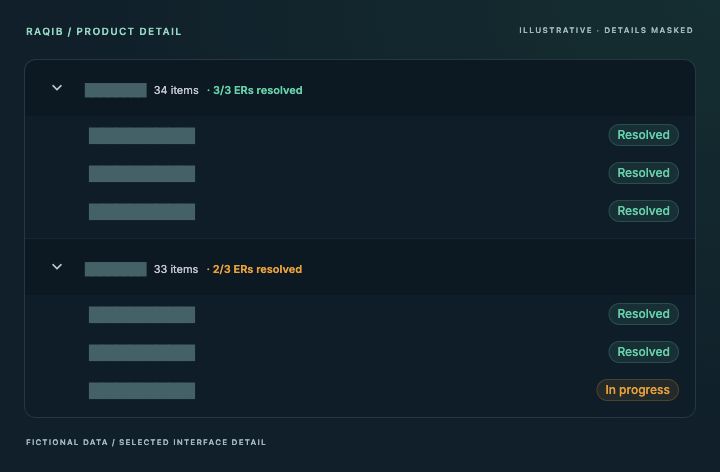
Masked evidence review excerpt with fictional demonstration statuses.

Selected interface detail · Fictional data · Identifiers masked

01Evidence context02Review visibility03Readiness confidence
01

A record becomes evidence through its relevance.

A document’s presence does not, by itself, explain what it demonstrates. Reviewers need to understand the requirement it supports, the operation it concerns and the period or circumstances it describes. These relationships turn a collection of material into a useful basis for assessment.

Raqib connects supporting information with requirements and review status. Teams can examine what is available, what needs clarification and what still requires a contribution. The assessment becomes easier to explain because the supporting material stays in view.

02

Distinguish intent, implementation and open questions.

A policy can describe an intended approach, while a record of activity may help assess how that approach is applied. Both may be relevant, but they answer different questions. Recognizing the distinction helps evidence owners respond purposefully and gives reviewers a more complete picture.

Specialized agents support the organization and assessment of this material. Human reviewers consider relevance and sufficiency, resolve ambiguities and determine the appropriate conclusion. A clear handoff between contribution and review keeps responsibility visible throughout the work.

03

Give readiness a basis people can examine.

Leadership needs to understand more than an overall status. The useful questions concern what supports that position, which findings remain open and who is responsible for the next action. Evidence intelligence brings the detail behind these questions closer to the readiness discussion.

As records and responsibilities change, the team can revisit the corresponding assessment context. This supports a continuing discipline of review and follow-through. It also makes the next audit conversation more purposeful: reviewers can examine the basis of the position and concentrate on the questions that still matter.

A COMPLIANCE DEMONSTRATION

Can we support this requirement?

Follow one requirement through a fictional assessment. See the evidence, the question that remains open and the action assigned for review.

Explore audit readiness
01

Examine the evidence

Review linked documents and records, with missing or outdated material called out.

02

Understand the finding

See the assessment context and what the reviewer needs to clarify.

03

Follow the next action

Trace the outstanding work to its responsible owner and review status.

See Compliance in a private demo

THE BASIS FOR CONFIDENCE

Give every readiness statement something to stand on.

Evidence has value when its relevance is clear. A policy describes an intention; a record may show what happened; a review establishes what that information supports. Raqib helps bring these distinctions into the assessment so teams can explain their position and focus the work still needed.

Relevance to the requirement

Understand which obligation a document or record supports. Keep the review focused on the question being assessed, even when several teams contribute material.

Visibility of unresolved questions

Identify where supporting information is missing, incomplete or due for renewed review. Give evidence owners a clearer understanding of what needs attention.

Continuity through review

Connect the evidence discussion with assessment status and follow-up. Make it easier to understand the basis for a conclusion as responsibilities and information change.

IN PRACTICE

A document is a starting point

An approved access policy may explain the intended practice, while review records help show how that practice is maintained. Viewing both in the context of the requirement helps a reviewer decide what is supported and what further information is needed.

A CLEARER UNDERSTANDING

The questions worth asking.

How does AI help with evidence?

AI-supported analysis helps interpret material and relate it to the assessment context. Reviewers remain responsible for deciding whether the evidence is relevant, sufficient and appropriate to the requirement.

How is sensitive evidence handled?

The documented platform safeguards include permission-based access, separation between organizations’ data and activity records. The information needed for a specific engagement is discussed with your team before it is shared.

LET’S START WITH YOUR PRIORITIES

Where would greater evidence clarity make the difference?

Bring the challenge your team needs to address. Explore how Raqib fits your environment and agree on a focused next step with our team.

Start the conversation